Help Me Help My Struggling Reader - Part 1

Stephanie Tsapakis
|
Published on Apr 20, 2021 · 4 min read

Stephanie Tsapakis
|
Published on Apr 20, 2021 · 4 min read
Alarm clock, chef, stylist, personal assistant, psychologist, nurse, teacher, AND playmate. These are just some of the roles parents fill on a daily basis. Parents have it hard, especially parents of students with learning differences. The number one misconception I come across when I speak with families about their struggling readers is that one or both parents should know how to work with their child to help their reading improve. If you take away anything from this blog, I hope it is this: you are not a dyslexia specialist, speech pathologist, or special education teacher. You are not expected to do it all, and there is help out there!*
Read more: Why Apps will NOT Help Your Child's Dyslexia
This is part 1 of our multi-part blog series that will focus on practical tips for parents to use at home to help support their struggling reader or student with dyslexia. Even general classroom teachers are often unprepared to provide effective intervention to students with reading difficulties, let alone recognize them.
Being able to provide targeted instruction starting with the most fundamental units of language takes training, time, and expertise. We have a huge problem at the university level, not preparing teachers for teaching children to read - but that is another blog! However, there are still things you can do at home to support your child!
Also read: What to Look For in a Reading Tutor
Also read: What to Look For in a Reading Tutor
Many of us do not seem to remember the fact that reading is not a natural skill. It is a completely made-up human function that requires explicit and systematic instruction. Since I previously mentioned that teachers do not receive adequate training at universities to teach reading, this is why we have so many children lacking mastery in the fundamental phonological skills needed for reading.
Many teachers often advise parents to read with their children up to 20 minutes per night. While you certainly cannot harm by reading to your child, random practice or trying to read words that children have not been explicitly taught how to read will only cause frustration. Additionally. Memorizing sight words is also not effective for teaching children to be fluent readers.
This is why most Orton-Gillingham based intervention methods (see our resources page) for more info on this start with the simplest words to read - closed syllables or CVC (consonant-vowel-consonant) words. A closed syllable is one vowel followed by one consonant sound.
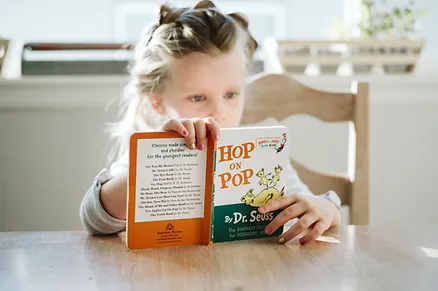
Tip: Rhyming, alliteration (she sells seashells), onomatopoeias (POW!), and similes (they blew through like tornadoes) are great to use with any activity. For example, if you are eating ice cream with your child, you can incorporate these literacy elements into your conversations.
Syllable Types:
There are six types of syllables in the English language. These syllables are the basis for sounding out words. However, students need to master closed syllables first. These are sometimes called CVC words/syllables because they are made by closing in a vowel with one consonant sound. For example: cat, hop, run, peg, fin. That's it.
Remember, digraphs "wh, th, sh, ch, and ck" are thought of as one sound (kind of like one letter), so they should never be separated.
These words will always have short vowel sounds. You can practice regular words with closed syllables by making sure there is a consonant after the vowel, and that the vowel makes it's short sound.
Here are some key words to help you and your child remember the closed vowel sounds:
a - apple - /ah/
e - Ed - /eh/
i - itch - /ih/
o - octopus - /aw/
u - up - /uh/
See how many words you and your student can think of that follow the closed syllable rules.
Write 10-15 closed syllable words on post-it notes. Make sure to use a variety of short vowel sounds. Have your student hold a fly swatter and "swat" the words you say. Or, you can have them "swat" words with specific short vowel sounds (e.g. - find a word with the sound "ah")
Have students come up with rhyming words, if you give them the word "cat" see if they can think of other words that end with the "at" sound
Write closed syllable words on a hopscotch game with sidewalk chalk. Have your student read the words aloud as the play the game.
Write 10-15 closed syllable words on index cards. Be sure to write each word twice. Have your child play "Memory" by turning each card upside down, and trying to find the match.
Here is a list of words to use for your activities, but feel free to come up with your own as well!
a: cap, hat, bat, pat, chat, path, dash, ash, bag, tag, sash, rap. hack, gab
e: Ed, pet, wet, peg, ten, jet, beg, shed, web, pen, vex, hen
i: tip, itch, in, pin, which, hit, gin, tin, fish, wish, dish, sin, sit, ship, thin, shin, rick, thick, chin,
o: top, posh, dock, shot, nob, hog, fog, mop, shop, dog, log, Rob
u: up, tuck, duck, luck, pup, mud, tub, fun, hush, gush, sun, jug, chuck, sum, bun
You got this, parents - and we are always here to help! We hope this was useful to you. If you want to know more about it, schedule a consultation today!
Looking for personalized support for your child's learning journey?
Our tutoring and dyslexia intervention services are tailored to students with learning differences. Whether it's reading, writing, or other challenges, our team offers one-on-one guidance.
Start with a consultation!Stay updated with our latest blog posts.
Cart